

How to Write a Product Brief for Overseas Factories
What you’ll learn
- The core components every factory specification document must contain.
- How to define materials, tolerances, and finishes without leaving room for interpretation.
- A side-by-side comparison of vague instructions versus production-ready specifications.
- How clear briefs accelerate quotation turnaround and streamline on-ground quality control.

Table of contents
- Why a Clear Product Brief Dictates Manufacturing Success
- Core Components of a Production-Ready Product Brief
- Step-by-Step: How to Draft and Finalize Your Brief
- Vague vs. Clear Specifications: Practical Examples
- Pre-Flight Checklist: Audit Your Brief Before Submission
- Bridging the Communication Gap with On-Ground Support
- Frequently Asked Questions
Why a Clear Product Brief Dictates Manufacturing Success
When sourcing custom goods or modifying off-the-shelf items from overseas suppliers, your product brief serves as your primary engineering contract and quality baseline. Overseas manufacturers rarely guess your design intent. When technical specifications are missing or ambiguous, factory engineers make assumptions based on standard domestic practices, available scrap stock, or the cheapest production method.
A poorly constructed brief causes several predictable issues: inaccurate initial price quotations, protracted sample revision cycles, unexpected material substitutions, and disputed quality control inspections. Conversely, providing a precise, unambiguous brief demonstrates professionalism, commands respect from factory management, and establishes objective criteria against which finished goods are evaluated.
Whether you are producing consumer electronics, soft goods, kitchenware, or industrial components, the fundamentals of a production-ready brief remain consistent across categories.
Core Components of a Production-Ready Product Brief
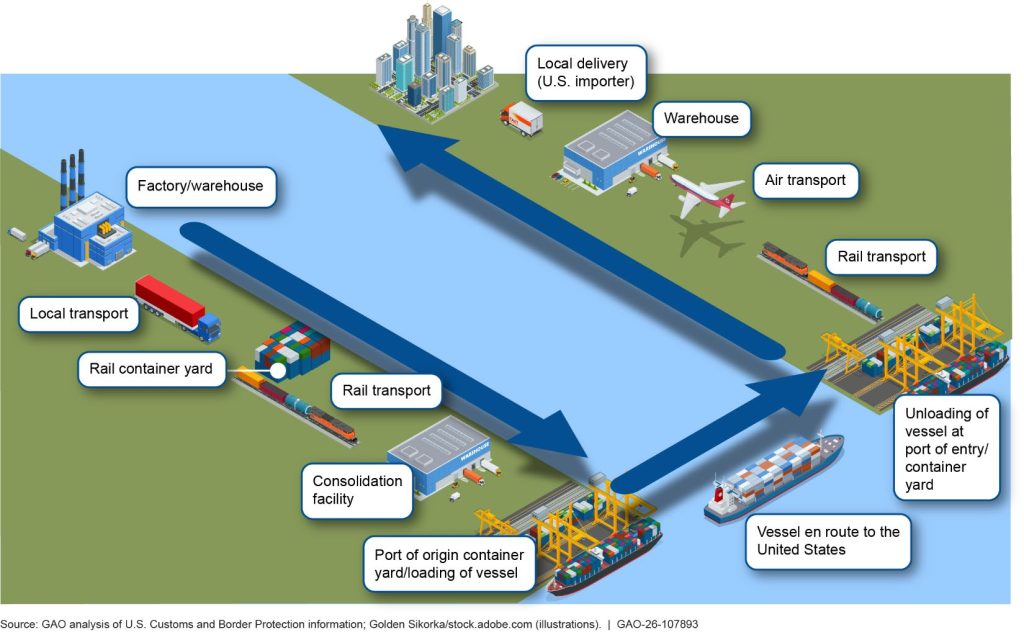
A complete product brief—frequently referred to as a Product Specification Sheet (Tech Pack or Spec Sheet)—should be organized logically so purchasing agents, toolmakers, and line supervisors can locate critical parameters instantly.
1. Product Overview and Functional Requirements
Start with a brief executive summary explaining what the product does, its target retail environment, and its intended operating conditions. If the product will be exposed to UV light, moisture, extreme temperatures, or continuous mechanical stress, state these conditions explicitly. Understanding the end-use helps the factory recommend appropriate manufacturing processes and identify potential design flaws before tooling begins.
2. Bill of Materials (BOM)
The Bill of Materials lists every individual component, raw material, and sub-assembly required to produce one finished unit. For each component, specify the exact material grade, color standard (such as Pantone or RAL codes), and required certifications (such as food-grade FDA compliance, RoHS, or REACH). Do not simply state "stainless steel"; specify whether you require 304, 316, or 430 grade.
3. Dimensions, Critical Tolerances, and 2D/3D Drawings
Provide dimensional drawings with explicit metric units (millimeters). Highlight "critical-to-function" dimensions—those that affect mating parts, structural integrity, or internal components—and assign specific tolerance bands (for example, ±0.1 mm). Leaving tolerances unspecified allows the supplier to apply default commercial tolerances, which may be far too loose for your application.
4. Surface Finishes, Colors, and Cosmetic Standards
Surface treatments impact both cosmetic appeal and corrosion resistance. Clearly define finishes using established manufacturing terminology: SPI mold polish standards for plastics (such as SPI A-2 for high gloss or SPI C-1 for stone finish), anodizing thickness and type for aluminum, or powder coating texture. Include acceptable defect limits for cosmetic surfaces, specifying inspection distances and lighting conditions.
5. Packaging, Labeling, and Barcode Requirements
Packaging often suffers from being treated as an afterthought, leading to shipping damage or customs rejections. Detail internal protection (such as molded pulp, polybags with suffocation warnings, or custom foam inserts), master carton burst strength (single-wall vs. double-wall corrugated), palletization rules, shipping marks, and exact barcode formats (UPC, EAN, or Amazon FNSKU).
Step-by-Step: How to Draft and Finalize Your Brief
Follow a structured process when assembling your technical dossier to ensure no critical engineering, compliance, or logistics parameters are omitted.
- Consolidate CAD files and visual assets: Prepare native 3D CAD files (STEP or IGES format) alongside dimensioned 2D engineering drawings (PDF). Supplement these with labeled photographic references showing acceptable and unacceptable aesthetic details.
- Establish objective testing protocols: Define precisely how the product will be validated. If a hinge must survive 5,000 cycles, state the cycle speed, load weight, and failure criteria. Specify drop tests, salt spray corrosion tests, or waterproof immersion ratings.
- Translate standards to international equivalents: If your domestic engineering team uses ASTM or ANSI standards, research and reference the corresponding ISO or GB (Guobiao) standards used by Chinese factories to prevent confusion during testing.
- Define defect classifications: Specify what constitutes a Critical, Major, or Minor defect based on standard Acceptance Quality Limit (AQL) tables. This ensures your factory understands your quality expectations before mass production starts.
- Conduct a supplier review session: Walk through the brief item by item with the supplier's engineering team. Ask open-ended questions to confirm they possess the machinery, tooling capability, and raw material access needed to satisfy each line item.
Vague vs. Clear Specifications: Practical Examples
The table below illustrates common phrasing found in inexperienced buyer briefs alongside the corresponding technical language required by professional manufacturing facilities.
| Product Element | Vague / Ambiguous Instruction | Production-Ready Specification |
|---|---|---|
| Material | High-grade durable black plastic | Virgin Polycarbonate (PC), Sabic Lexan 121R or equivalent; UV stabilized; UL94 V-0 flame rating; Color: Pantone Black 6C. |
| Dimensions | Approx. 120 mm wide, standard fit | 120.0 mm (+0.1 mm / -0.0 mm); critical interface dimension for mounting bracket; reference Drawing DWG-004-RevC. |
| Surface Finish | Smooth, premium matte feel | VDI 3400 Ref 24 spark erosion texture on exposed exterior surfaces; parting lines flush to within 0.05 mm; gate vestige trimmed ≤0.2 mm. |
| Logo Application | Brand logo printed on front | 1-color pad print; Pantone Cool Gray 8C; 25 mm × 8 mm; centered 12 mm below top bezel; must pass 3M 610 tape adhesion test. |
| Packaging | Sturdy brown box with retail sleeve | Double-wall corrugated shipping carton (200 lb test, ECT-32); custom 350 gsm C1S paperboard retail box with matte aqueous coating. |
| Durability Test | Must not break when dropped | ISTA 1A transit drop test: 10 drops from 76 cm onto concrete floor; no structural cracking or loss of electrical function permitted. |
Pre-Flight Checklist: Audit Your Brief Before Submission
Before transmitting your product specification package to potential suppliers for Request for Quotation (RFQ) processing, run through this pre-flight verification checklist:
- Version control: Is your document clearly tagged with a version number (e.g., Rev 1.2) and release date on every page to prevent obsolete revisions from reaching the shop floor?
- Language clarity: Are sentences concise and straightforward? Avoid idioms, regional jargon, and complex grammatical structures that translate poorly into Chinese or Bengali.
- Regulatory requirements: Have you detailed mandatory target-market compliance markings, such as FCC, CE, UKCA, or Proposition 65 labeling requirements?
- Packaging dimensions and weights: Are gross carton weights, individual unit weights, and container packing limits defined to optimize freight calculations?
- Intellectual property boundaries: Have you paired your brief with a bilateral Non-Disclosure, Non-Use, Non-Circumvention (NNN) agreement governed by local jurisdiction before disclosing proprietary schematics?
Bridging the Communication Gap with On-Ground Support
Even with an exhaustive specification brief, unexpected discrepancies can arise during the sampling and tooling phases. Factories may misinterpret subtle drawings, or sub-tier vendors supplying hardware or coatings may substitute unapproved grades without alerting factory management.
This is where local oversight becomes essential. Working with SourcingC ensures that your technical requirements are translated into Chinese manufacturing vernacular and audited directly on the production line. With boots on the ground across manufacturing hubs, SourcingC conducts in-person technical reviews, audits tooling progress, and performs rigorous inspections to verify that every run adheres strictly to your approved brief.
Having multi-regional teams with offices in China, Bangladesh, and the United States allows buyers to resolve engineering questions during standard domestic business hours while on-ground teams verify corrections at the factory the very next morning.
Frequently Asked Questions
What file formats should I include with my product brief?
Provide 2D drawings in vector PDF format with all dimensions, critical tolerances, and notes clearly marked. For molded, cast, or CNC-machined parts, supply 3D geometry in standardized neutral formats like STEP (.stp) or IGES (.igs). For printed graphics and packaging, supply editable Adobe Illustrator (.ai) files with all text converted to outlines.
How detailed should a brief be for an ODM (private label) product?
For Original Design Manufacturing (ODM)—where the factory already owns the tooling—your brief does not need internal component drawings. However, it must precisely detail your required customizations: custom colors (Pantone), logo application methods and placements, packaging artwork, retail barcoding, regulatory certifications, and specific quality inspection acceptance criteria.
Can I use my product brief as a legally binding quality agreement?
Yes. In fact, a production brief should serve as Appendix A of your formal Manufacturing and Supply Agreement. When referenced directly in your purchase order terms, the brief establishes the contractual standard that determines whether a shipment passes or fails inspection before balance payment is released.
How can I protect my intellectual property when sharing a brief with new suppliers?
Do not send unredacted files to multiple unvetted factories at once. Shortlist qualified candidates first using general capability inquiries, sign a China-enforceable NNN (Non-disclosure, Non-use, Non-circumvention) agreement, and consider withholding proprietary firmware or final assembly integration steps until you have selected a primary partner.
Need help drafting production-ready specifications or auditing your overseas factories? Partner with SourcingC to eliminate manufacturing risks with end-to-end sourcing, vetted suppliers, and on-ground quality control. Get in touch with our team today for a free consultation.
Images: Image by Quanlecntt2004 on Pixabay · Image by blickpixel on Pixabay · Photo by U.S. GAO / Wikimedia Commons · Image by Pexels on Pixabay